| If profound intractable problems exist in society, it follows that the professions needed to fix them have not yet been invented. Ian Wojtowicz (he/him) is a writer who builds stuff. His work applies techniques of connection, dissensus, modifiability, playfulness, editing, argument, dialogue, and repair. He has shown work in Hong Kong, Europe and throughout North America, and has published work in Wired Magazine, Atlantic Monthly, and on PBS and Discovery channels. Professionally, Wojtowicz has consulted for the Canadian Broadcasting Corporation, the US National Coast Guard Museum, the Redwoods National and State Parks, and indigenous cultural projects at Nk'Mip and Wanuskewin. Wojtowicz holds a degree in Art, Culture and Technology from MIT’s School of Architecture and is the editor of a collected volume from MIT Press entitled Interrogative Design, on artist Krzysztof Wodiczko's influential design philosophy. He currently lives and works in Vancouver, Canada, on the territories of the Squamish, Musqueam and Tsleil-Waututh people. |
Mirror Shulhanot
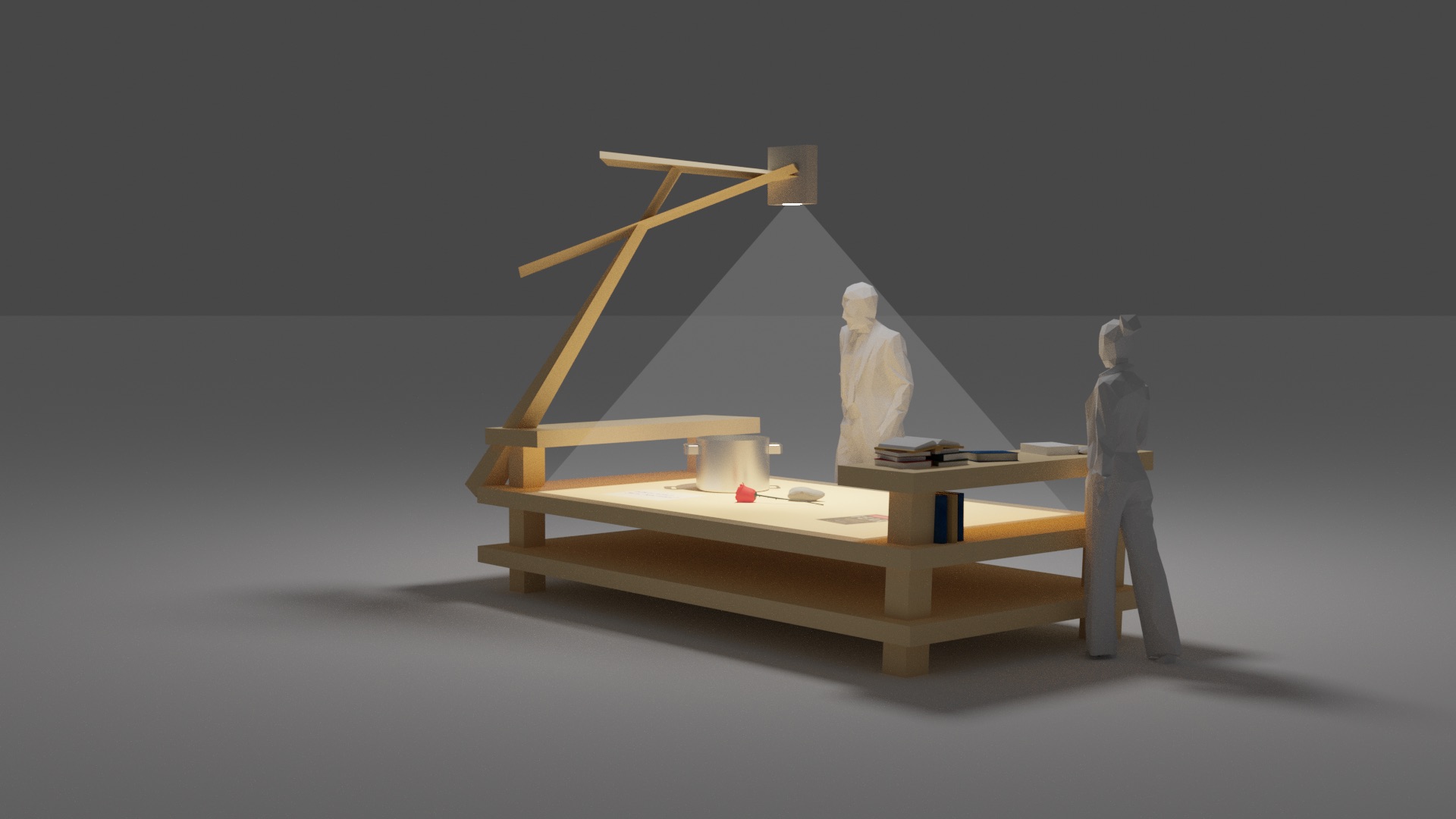
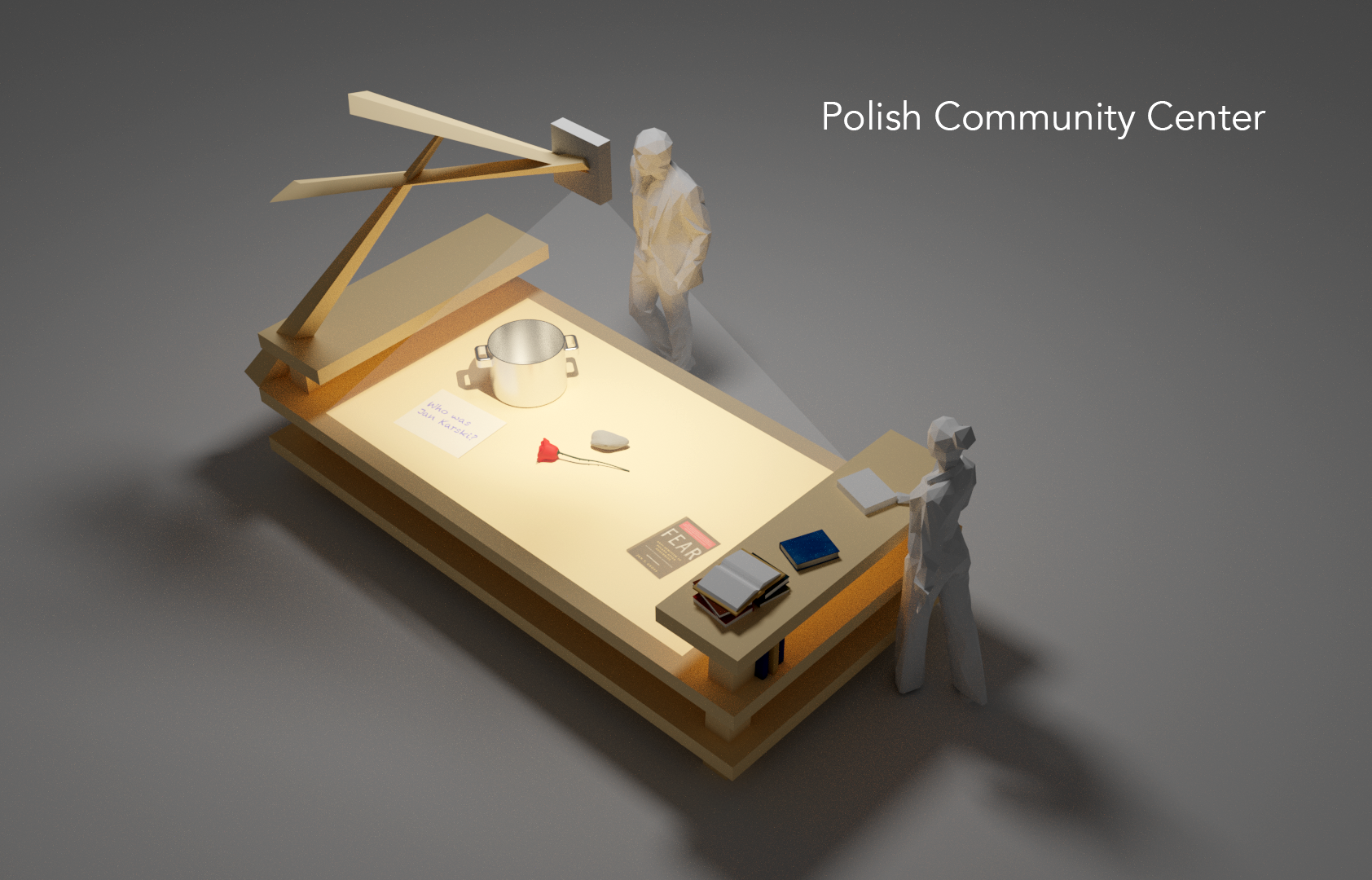
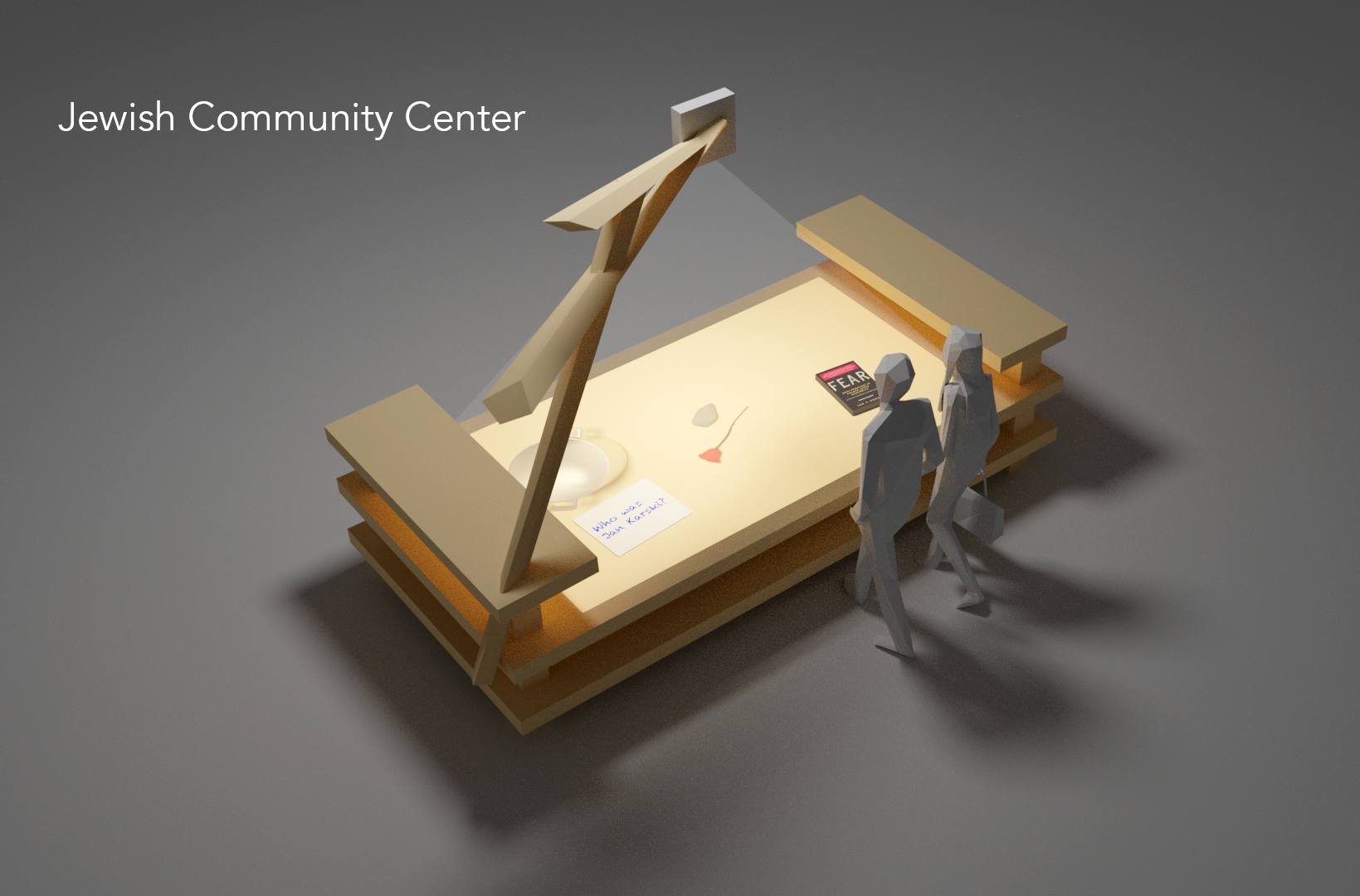
This unique pair of tables creates a living connection between a Polish Community Center and a Jewish Community Center. Members of one space can communicate with members of the other by leaving objects and written messages on the surface of their table. Cameras and projectors transmit live video of each tabletop to the other, creating a virtual shared space and a slow communication process that evolves over weeks and months between both buildings. The tables can be used to share stories, perform gestures, make collages, have conversations and generally educate one another on whatever topic is important at the time.
As an alternative to fast paced inflamatory social media channels, devices like these might have helped temper recent controversies surrounding the Polish Holocaust bill as well as fallout from anti-Polish comments by Israeli politicians.
By connecting Polish and Jewish communities living in the same city who might not normally interact, these tables offer the opportunity for gradual proximity and eventual face to face encounters. The tables can also be spread between different cities, connecting diaspora communities to people in Poland and Israel.
Professor Eva Hoffman wrote, “the Polish-Jewish relationship is the embattled terrain of several collective memories, each with its claim to moral legitimacy, and each charged with fierce and sometimes vehement feelings.” The Mirror Shulhan project offers a symbolic communication process that emphasizes slow reflection and deliberate, intentional gestures that temper these intense feelings, opening the door for new kinds of understandings between the two communities.