| If profound intractable problems exist in society, it follows that the professions needed to fix them have not yet been invented. Ian Wojtowicz (he/him) is a writer who builds stuff. His work applies techniques of connection, dissensus, modifiability, playfulness, editing, argument, dialogue, and repair. He has shown work in Hong Kong, Europe and throughout North America, and has published work in Wired Magazine, Atlantic Monthly, and on PBS and Discovery channels. Professionally, Wojtowicz has consulted for the Canadian Broadcasting Corporation, the US National Coast Guard Museum, the Redwoods National and State Parks, and indigenous cultural projects at Nk'Mip and Wanuskewin. Wojtowicz holds a degree in Art, Culture and Technology from MIT’s School of Architecture and is the editor of a collected volume from MIT Press entitled Interrogative Design, on artist Krzysztof Wodiczko's influential design philosophy. He currently lives and works in Vancouver, Canada, on the territories of the Squamish, Musqueam and Tsleil-Waututh people. |
Service Temporarily Unavailable
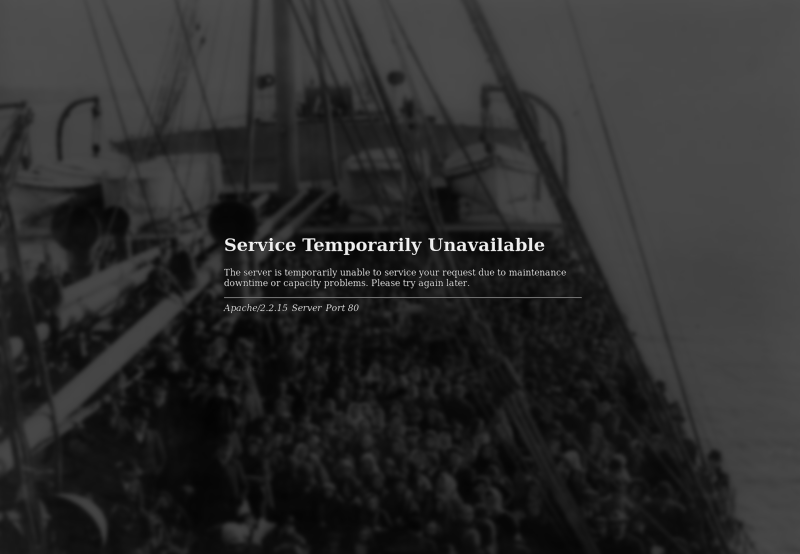
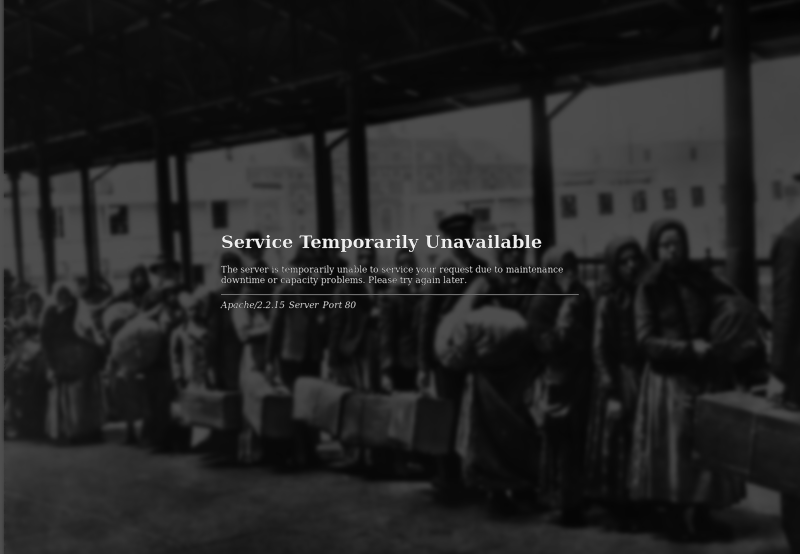
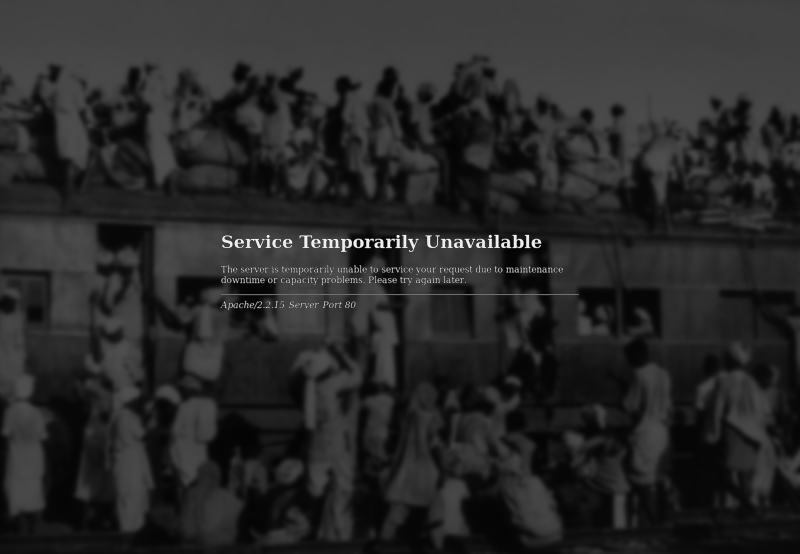
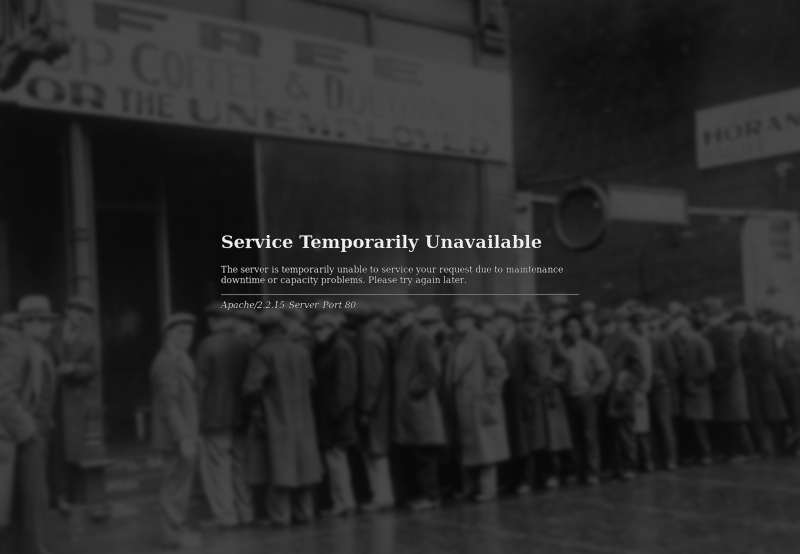
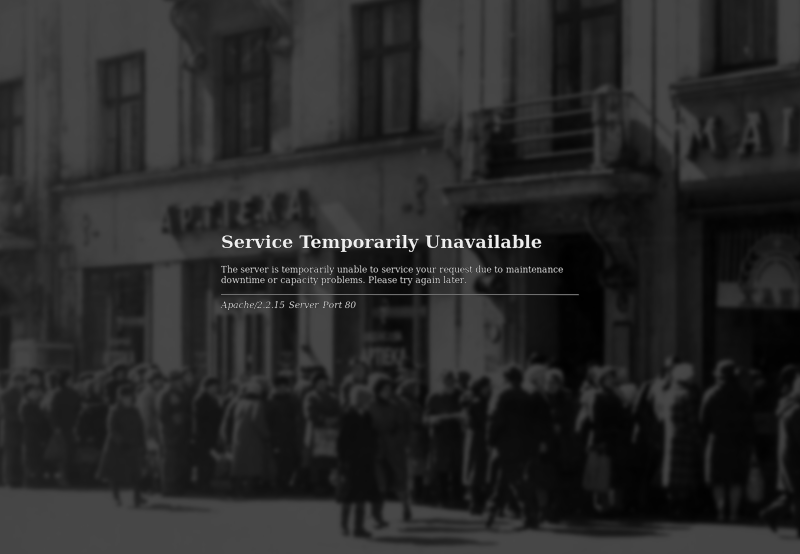
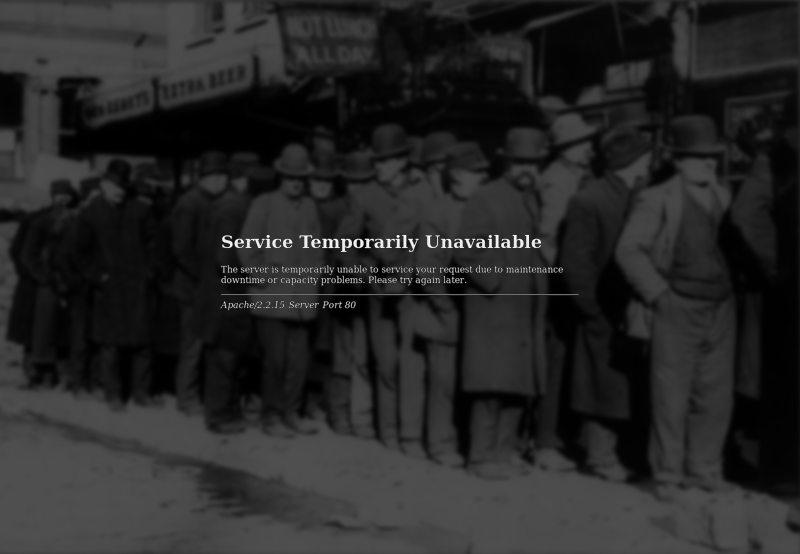
Public calamities are becoming less visible in our cities due to technological and cultural change. The 2008 housing crisis, for example, affected millions of Americans, yet unlike earlier events such as the Great Depression, people suffered in private, away from the public eye. Earlier economic downturns regularly resulted in massive line-ups, urban congestion and public demonstrations. Today, collective suffering often takes place in closed rooms, behind glowing screens.
One of the noticeable effects of the housing crisis was the stalling of state welfare and unemployment webservers from excessive use. Similar break-downs have occurred during other major events, such as the Canadian immigration server crashes following the 2016 US Presidential elections, and airline and unemployment telephone service lines during the COVID-19 pandemic.
This photo series juxtaposes social upheavals of the 20th century with the common "503 Service Unavailable" error message seen when a webserver is overloaded. The message is shown over altered images of soup kitchen lines in the '20s, Soviet bread lines, crowded train stations during the partition of India, and overloaded passenger ships from WWII. This series calls to attention the shortcomings of contemporary photojournalism — a discipline that has yet to depict these new wide-scale conditions of isolated suffering. Digital technologies have a dulling effect on our ability to notice the suffering of others and we need new communications vocabularies to counteract this.
Many troubling trends may not even be as visible as these overloaded web servers. Stephen Pinker recently observed that "there have been more firings, sanctions, and censorship in the last ten years at Harvard than during the entire Macarthy era." The complexities and obsurities of these and other tangential problems have led Law Professor, Daniel Solove to describes these new conditions as having more in common with Kafka than Orwell.